Asbestos removal and building refurbishment require careful planning, clear responsibilities and close coordination between every contractor involved. When asbestos-containing materials are located on a roof, external wall or another elevated area, specialist access scaffolding may be needed.
Scaffolding for asbestos removal in Bournemouth must be planned around the asbestos survey, risk assessment and removal contractor’s agreed method of work. Its purpose is to provide suitable access and support the overall safety arrangements for the project.
RH Scaffolding provides specialist scaffolding installation that can support asbestos removal projects across Bournemouth and the surrounding region. The asbestos assessment and removal must be managed by appropriately trained and, where legally required, HSE-licensed asbestos professionals.
Why Is Asbestos Dangerous?
Asbestos was used in many construction materials before its use was prohibited in the UK. When asbestos-containing materials are disturbed or damaged, microscopic fibres can be released into the air.
Breathing these fibres can cause serious diseases that may not become apparent until many years after exposure. For this reason, suspected asbestos should not be cut, drilled, broken, moved or otherwise disturbed without an appropriate assessment.
Buildings constructed or refurbished before the year 2000 may contain asbestos. Its presence cannot be reliably confirmed by appearance alone, so a suitable asbestos survey and laboratory analysis may be required before work begins.
Where Might Asbestos Be Found?
Asbestos-containing materials can be found in different parts of residential, commercial and industrial buildings. Examples may include:
- Corrugated asbestos cement roof sheets
- Soffits, fascias and external panels
- Asbestos insulating board
- Pipe and boiler insulation
- Sprayed coatings
- Textured decorative coatings
- Ceiling and partition panels
- Gutters and downpipes
- Roofing felt and other bitumen products
The type, location and condition of the material influence how the work must be classified and managed.
When Might Scaffolding Be Required?
Specialist access scaffolding may be required when asbestos-containing materials cannot be reached safely from ground level. This can include work involving:
- Asbestos cement roofing sheets
- High-level external cladding or panels
- Soffits and roofline components
- Industrial roofs and warehouse buildings
- Multi-storey commercial properties
- Structures with restricted access
- Roof coverings above conservatories or extensions
The scaffold arrangement will depend on the building, the location of the material and the removal contractor’s plan of work.
Scaffolding Does Not Replace an Asbestos Survey
Before scaffolding or refurbishment work begins, the client and principal contractor must establish whether asbestos could be present in areas that may be affected.
An appropriate asbestos survey can identify known or suspected asbestos-containing materials, their condition and their location. This information must be shared with the scaffolding contractor and everyone else whose work could disturb the building.
If unexpected suspect material is discovered, work should stop and the area should remain undisturbed until competent asbestos professionals have assessed it.
Licensed and Non-Licensed Asbestos Work
Not every asbestos-related task is classified in the same way. Depending on the material, condition and proposed work, the activity may be:
- Non-licensed work
- Notifiable non-licensed work
- Licensed asbestos work
Higher-risk work, including work on sprayed asbestos coatings, most asbestos insulation and most asbestos insulating board, must be undertaken by a contractor licensed by the Health and Safety Executive.
The decision must be made through an appropriate risk assessment by competent professionals. HSE provides detailed guidance explaining when asbestos work requires a licensed contractor.
Can Erecting the Scaffold Require an Asbestos Licence?
The scaffolding activity itself must also be assessed. HSE states that a licence may be required for work ancillary to licensable asbestos work, including erecting scaffolding where it is foreseeable that the activity is likely to disturb asbestos.
This means the sequence of work and position of the scaffold cannot be planned in isolation. The asbestos specialist, scaffolding contractor and person controlling the project must establish whether the scaffold can be installed without disturbing asbestos-containing materials.
If there is a foreseeable risk of disturbance, suitable licensed arrangements must be made before the scaffolding work proceeds.
Coordinating With the Asbestos Removal Contractor
Close coordination is essential because the scaffolding must support the removal method without introducing additional risks.
Information that may need to be shared includes:
- The asbestos survey and register
- The location and condition of asbestos-containing materials
- The licensed contractor’s plan of work
- Required platform positions and access routes
- Proposed enclosure or controlled working areas
- Waste removal arrangements
- Decontamination facilities and routes
- Emergency procedures
- The proposed sequence of erection, removal and dismantling
No alterations should be made to the scaffold without approval from the responsible scaffolding contractor and coordination with the asbestos project team.
Preventing Unauthorised Access
An asbestos removal site must be controlled to prevent workers, occupants and members of the public from entering restricted areas. The scaffold must be considered as part of the wider site security plan.
Depending on the assessment, precautions may include:
- Physical barriers around the work area
- Clear warning and prohibition signs
- Secured ladder access outside working hours
- Controlled entry and exit points
- Coordination with occupants or neighbouring businesses
- Protection for nearby pedestrian routes
The exact measures must be determined by those managing the asbestos removal and construction work.
Scaffolding for Asbestos Cement Roof Removal
Asbestos cement sheets were commonly used on garages, warehouses, agricultural buildings and industrial units. Although asbestos cement is generally considered lower risk than more friable asbestos materials, it must still be handled using suitable controls.
Roof sheets may become fragile due to age and weathering. Contractors should never assume that an asbestos cement roof can safely support a person’s weight.
Access scaffolding and appropriate edge protection may form part of the agreed working method. The plan must also address how sheets will be removed without unnecessary breakage and how they will be transferred to ground level for controlled disposal.
Weather Protection and Screening
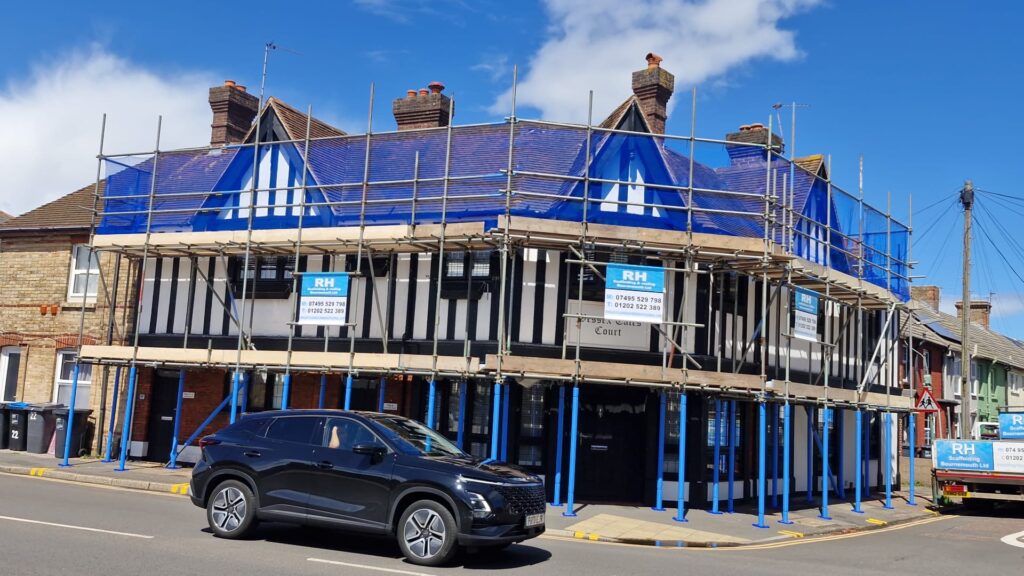
Some projects may require screening, sheeting or temporary weather protection. These additions can change the loads placed on a scaffold, particularly during windy conditions.
Protective materials should only be added when they are included within the scaffold design or approved by the scaffolding contractor. Contractors should not attach their own sheeting, enclosures or equipment without authorisation.
Asbestos Waste and Site Clearance
Asbestos waste must be packaged, labelled, transported and disposed of in accordance with the applicable requirements. These responsibilities sit with the asbestos removal team and licensed waste professionals rather than the access scaffolding provider.
Scaffolding should not be dismantled until the responsible project team confirms that the relevant asbestos work, cleaning and clearance procedures have been completed and it is safe for scaffolders to enter the area.
Choose a Carefully Coordinated Scaffolding Service
Providing access for an asbestos project involves more than erecting a standard scaffold. The structure, erection sequence, access controls and dismantling arrangements must be coordinated with the asbestos specialists and overall project plan.
RH Scaffolding provides professional and fully insured specialist scaffolding services in Bournemouth for domestic, commercial and industrial projects.
Arrange Specialist Scaffolding in Bournemouth
If your project involves known or suspected asbestos, obtain professional asbestos advice and the appropriate survey before arranging construction or access work.
Once the asbestos requirements and removal method have been established, RH Scaffolding can discuss the access requirements with the responsible contractor.
Planning an asbestos-related refurbishment or removal project? Contact RH Scaffolding or call 01202 522 389 to discuss the required access scaffolding.