
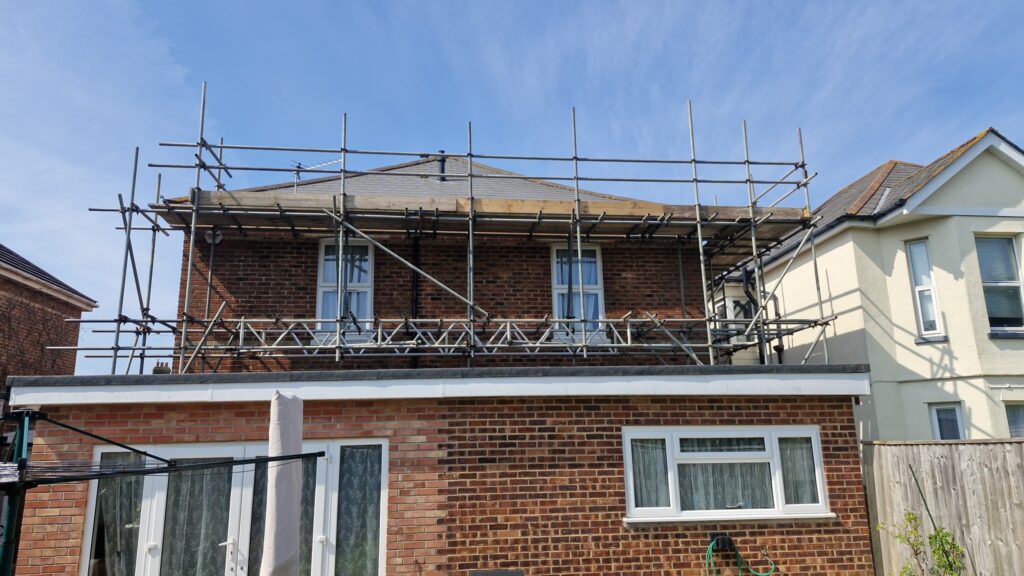
Scaffolding may only be needed for a few days during a straightforward repair, but larger roofing, rendering or renovation projects can require it to remain in place for several weeks or even months. Understandably, property owners often want to know whether there is a maximum scaffolding hire duration.
There is no single time limit that applies to every scaffold. How long it can remain at a property depends on the hire agreement, the progress of the work, the condition of the structure, ongoing inspections and whether the scaffold continues to be suitable for its intended purpose.
RH Scaffolding provides professional scaffolding services in Bournemouth for domestic, commercial and construction projects. This guide explains what can affect the hire period and what you should do if your project takes longer than expected.
Is There a Maximum Scaffolding Hire Duration?
Scaffolding does not automatically become unsafe simply because it has remained erected for a particular number of days or weeks. A properly designed, maintained and inspected scaffold may remain in position for an extended project when suitable arrangements are in place.
However, this does not mean scaffolding can be left indefinitely without management. The structure must continue to be:
- Suitable for the work being carried out
- Secure and stable
- Inspected at the appropriate intervals
- Protected from unauthorised alteration
- Covered by an active hire agreement
- Removed by competent scaffolders when it is no longer required
The scaffolding company should be informed if the project schedule changes or if the scaffold will be needed beyond the originally agreed hire period.
How Long Is Scaffolding Normally Hired For?
The expected hire period varies considerably between projects. A scaffold used for gutter repairs may be needed for much less time than one supporting a complete roof replacement or major building refurbishment.
Typical project durations might include:
- A short period for minor roof or chimney repairs
- Several weeks for exterior painting or rendering
- A longer period for a complete roof replacement
- Several months for an extension, restoration or major renovation
- An extended programme for commercial or construction work
These are only general examples. The actual scaffolding hire duration should be based on the programme provided by the builder, roofer or project manager.
What Determines How Long Scaffolding Can Stay Up?
The Type of Work
The work being completed is one of the main factors affecting the hire period. A small repair may be completed quickly, while roofing, brickwork, rendering and structural alterations can involve several stages.
Scaffolding may need to remain in place while different contractors complete their work. For example, an extension could require access for bricklayers, roofers, window installers, renderers and decorators.
The Size and Complexity of the Project
Larger properties and complex renovations generally require more time. Projects involving several elevations, multiple working levels, temporary roofing or difficult access may also have longer programmes.
The scaffold should not be removed until all work requiring that access has been completed and the responsible contractor confirms that it is no longer needed.
Weather Conditions
Rain, strong winds, frost and other adverse conditions can interrupt exterior work. Roofers, painters and rendering contractors may have to delay particular tasks until the weather becomes suitable.
Weather delays can extend the hire period even when the original project programme was realistic. It can therefore be helpful to allow some flexibility when arranging scaffolding for weather-dependent work.
Material and Contractor Delays
Building projects may also be delayed by unavailable materials, delivery problems or changes to contractor schedules. Unexpected defects can become visible once existing materials are removed, resulting in additional work.
If a delay means the scaffold is needed for longer, contact the scaffolding provider before the agreed hire period ends.
Permissions and Site Conditions
Scaffolding erected entirely on private land will have different considerations from a structure occupying or projecting over a public pavement or highway.
Where permission or a licence is required, it may apply for a specified period. An extension might need to be arranged if the scaffold must remain beyond the approved dates. The party responsible for the licence should check the applicable conditions before the expiry date.
What Happens If You Need the Scaffold for Longer?
Projects do not always finish on schedule. If you need to extend the scaffolding hire duration, contact the scaffolding company as soon as possible.
The provider can explain:
- Whether the hire period can be extended
- Whether additional hire charges will apply
- Whether another inspection needs to be arranged
- Whether any licence or permission must be extended
- Whether the scaffold remains suitable for the ongoing work
- When dismantling can be rescheduled
Do not assume that the scaffold can remain beyond the agreed collection date without notifying the provider. Scaffolding equipment may already be allocated to another project, and additional time may affect scheduling and charges.
Does Scaffolding Need to Be Inspected While It Is Up?
Yes. A longer hire period means the scaffold must continue to receive the required inspections.
The Health and Safety Executive explains that scaffolding used for construction should be inspected:
- Following installation and before it is first used
- At intervals of no more than seven days
- After substantial alterations
- After circumstances that may have affected its safety, such as high winds or severe weather
Inspections must be completed by a competent person with the appropriate knowledge, training and experience for the type and complexity of the scaffold.
You can read the official HSE guidance on scaffolding and inspections for further information.
RH Scaffolding places safety at the centre of every installation. You can learn more on our scaffolding health and safety page.
Who Is Responsible for Scaffold Inspections?
The user or hirer of scaffolding has responsibilities for ensuring that the required inspections are completed. The exact arrangements should be established before the scaffold is used, particularly when several contractors are working on the project.
Do not assume that an inspection has taken place simply because the scaffold appears secure. The project team should know:
- Who is responsible for arranging inspections
- Who is competent to perform them
- Where the inspection records are kept
- How defects will be reported
- Who will arrange any required corrective work
If you are a homeowner using a builder or roofing contractor, ask who will manage these responsibilities while the scaffold remains at your property.
Can You Use Scaffolding After the Original Work Is Finished?
Property owners sometimes decide to complete additional exterior maintenance while scaffolding is already available. This could appear more efficient than arranging another installation later.
Depending on the scaffold design, additional work might include:
- Cleaning or replacing guttering
- Painting exterior walls
- Repairing fascias and soffits
- Maintaining upper-storey windows
- Repointing brickwork
- Inspecting other roofline components
However, you should discuss the additional work with the scaffolding provider first. A scaffold designed for one activity may not have the correct platform positions, loading capacity or access arrangements for another.
The hire period may also need to be formally extended before further work begins.
Can You Alter the Scaffold Yourself?
No. Property owners, builders and other contractors should not remove, move or add scaffold components themselves.
This includes:
- Removing scaffold boards
- Changing guardrails or toe boards
- Moving access ladders
- Removing scaffold ties
- Adding platforms or loading areas
- Attaching sheeting, banners or netting
Even a change that appears minor could affect the stability, loading or safe use of the structure. Any alteration should be discussed with and completed by the responsible scaffolding contractor.
What If the Scaffold Is Not Being Used?
A scaffold may remain in position during a temporary pause in the work, but it must still be properly managed. The inspection requirements do not simply stop because contractors are absent for a few days.
Access may also need to be controlled to discourage children, trespassers or other unauthorised people from climbing the structure. Ladders and access points should be managed according to the site arrangements and risk assessment.
If the project has been paused indefinitely, speak with the scaffolding provider. In some circumstances, dismantling the scaffold and arranging a later installation may be more appropriate than leaving it unused for a prolonged period.
Will a Longer Hire Period Cost More?
Scaffolding quotations commonly include an agreed initial hire period. If the structure is required beyond that period, additional weekly or extended-hire charges may apply.
Charges can depend on:
- The amount of equipment being hired
- The length of the extension
- The size and complexity of the scaffold
- Additional inspection arrangements
- Licensing or permit requirements
- Whether alterations are needed
Always check what is included in the quotation. Ask when the initial hire period ends, what an extension would cost and how much notice is required before dismantling.
How Can You Avoid Unnecessary Hire Extensions?
Careful planning can reduce the likelihood of scaffolding remaining in place longer than necessary.
Before booking the scaffold:
- Confirm the project programme with your main contractor
- Make sure essential materials have been ordered
- Coordinate every trade that will require access
- Identify any additional exterior maintenance
- Allow reasonable flexibility for weather delays
- Clarify the initial hire period and extension charges
- Establish who will arrange ongoing inspections
Good communication between the customer, scaffolder and other contractors can prevent avoidable delays and help ensure the structure is removed at the appropriate time.
How Is Scaffold Dismantling Arranged?
Once all work at height is complete, contact the scaffolding provider to confirm that the structure is ready for collection. Provide reasonable notice rather than waiting until the final day of the agreed hire period.
Before dismantling:
- Confirm that every contractor has finished using the scaffold
- Remove tools and building materials from the platforms
- Clear the surrounding access area
- Move vehicles away from the working zone
- Inform the scaffolder about any damage or concerns
Only competent scaffolders should dismantle the structure. Do not attempt to remove individual parts to speed up the collection process.
Arrange Scaffolding Hire in Bournemouth
The appropriate scaffolding hire duration depends on the work, property and project programme. A realistic initial schedule, regular communication and properly managed inspections can help the scaffold remain available for as long as it is genuinely required.
RH Scaffolding provides reliable access solutions for roofing, renovation, painting, rendering and construction projects across Bournemouth and surrounding areas.
Do you need scaffolding for an upcoming project? Contact RH Scaffolding or call 01202 522 389 to discuss your anticipated hire period and request a quotation.