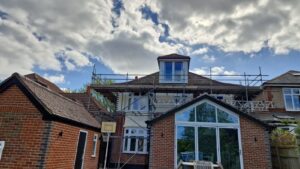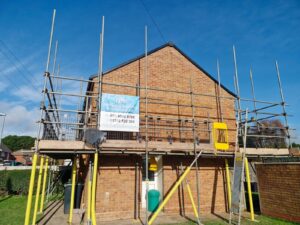
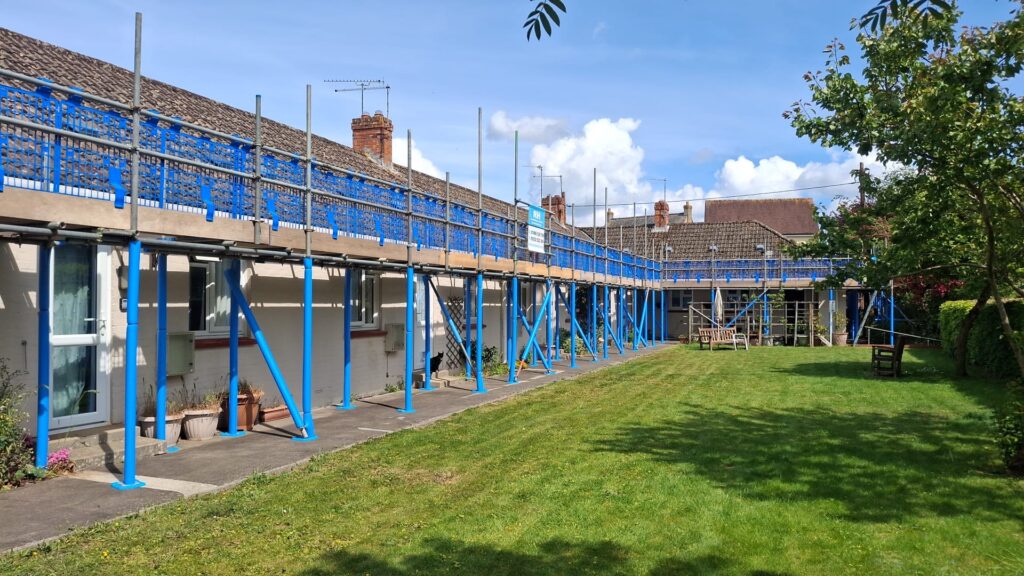
Roofing and renovation projects can leave parts of a building exposed while existing materials are removed and new components are installed. A professionally designed temporary roof can help protect the property, workers and construction materials during this vulnerable stage.
Temporary roof scaffolding in Bournemouth can be used for domestic, commercial and industrial projects where additional weather protection is required. The structure is normally supported by scaffolding and covered using suitable sheeting or a compatible temporary roofing system.
RH Scaffolding provides temporary roofing systems and professional access scaffolding for projects across Bournemouth, Poole and the surrounding region.
What Is a Temporary Scaffold Roof?
A temporary scaffold roof is a temporary structure erected above or around a building to provide protection while construction, repair or renovation work is underway.
It commonly consists of a supporting scaffold structure combined with a roof framework and protective covering. The specific design will depend on the size and shape of the building, the project requirements and the expected exposure to weather.
Temporary roofs can be constructed over an entire property or a specific working area. They may also be installed in stages where the design and construction programme allow it.
When Might a Temporary Roof Be Required?
Not every roofing project needs a temporary roof. However, additional protection may be beneficial when a property will remain exposed for an extended period or when water entering the building could cause serious damage.
Temporary roof scaffolding may be considered for:
- Complete roof replacements
- Major structural roof repairs
- Loft conversions and roof alterations
- Fire-damaged or storm-damaged buildings
- Conservation and restoration projects
- New-build developments
- Commercial building refurbishment
- Projects involving extensive chimney work
- Work on buildings containing valuable equipment or interiors
The roofing contractor, project manager and scaffolding provider should discuss the project before determining whether temporary coverage is appropriate.
Benefits of Temporary Roof Scaffolding
Protection Against Rain
Removing roof tiles, membranes or structural components can expose the inside of a building. A temporary roof can reduce the risk of rain entering the property while the permanent roof is incomplete.
This is particularly useful during projects that require the roof to remain open for several days or weeks.
A More Controlled Working Area
Temporary coverage can create a more controlled environment for contractors working underneath it. Although it cannot eliminate every effect of the weather, it may reduce interruptions caused by rainfall and help some tasks continue more consistently.
Protection for Building Materials
Timber, insulation and other construction materials can be affected by prolonged exposure to water. Temporary roof scaffolding can help protect materials already incorporated into the building and those stored within the covered area.
Support for Longer Projects
Restoration work and major structural alterations may take several months to complete. Temporary weather protection can be particularly valuable when scheduling the project entirely within a period of dry weather is unrealistic.
Reduced Risk of Internal Damage
Water entering an open building can damage ceilings, walls, floors, electrical systems and personal belongings. Protecting the structure while roofing work is underway may help reduce the risk of expensive secondary damage.
How Is a Temporary Roof Planned?
A temporary roof must be designed around the property and the work being completed. Factors that may influence the design include:
- The length and width of the building
- The height and pitch of the existing roof
- The length of the planned hire period
- The surrounding ground conditions
- Wind exposure at the site
- Nearby properties and boundaries
- Access required by roofers and other trades
- How construction materials will enter and leave the covered area
- Whether part of the roof needs to be opened temporarily
Because temporary roofs can be exposed to significant wind forces, they require careful planning. The supporting scaffold, ties, sheeting and roof system must all be suitable for the intended arrangement.
Fixed and Movable Temporary Roof Systems
Depending on the project, the roof may remain fixed in one position or include sections that can be moved or opened. A fixed structure can provide continuous coverage, while an opening section may allow larger materials to be lifted into the working area.
Movable or opening systems introduce additional design and operating considerations. The project team should establish how materials will be delivered before the temporary roof is designed and erected.
Can a Temporary Roof Withstand Severe Weather?
A temporary roof is designed according to its location and intended use, but it is still a temporary structure. Weather forecasts should be monitored, and the site team should follow any instructions provided by the scaffolding contractor.
The scaffold may require inspection after strong winds, heavy rainfall, alteration or any event that could affect its safety. Contractors should report loose sheeting, movement or visible damage immediately and keep away from affected areas until they have been assessed.
Temporary Roofs and Scaffold Inspections
Construction scaffolding should be inspected by a competent person before first use and at the required intervals. It should also be inspected after substantial alteration or conditions that may have affected its strength or stability.
The Health and Safety Executive explains that all roof work must be planned and organised so it can be carried out safely. You can review the official HSE guidance on roof work for further information.
How Long Can Temporary Roof Scaffolding Remain in Place?
The required hire period depends on the project programme. Before arranging the installation, speak with the principal contractor or roofer about how long the permanent roof work is expected to take.
The schedule should consider:
- Removal of the existing roof
- Structural repairs or alterations
- Installation of new timbers or supports
- Insulation and waterproofing
- Tile, slate or roof covering installation
- Chimney and leadwork
- Final inspections and snagging
Allowing sufficient time for every stage can prevent the temporary roof from being removed before the permanent structure is ready.
Preparing for a Temporary Roof Installation
Temporary roof systems require more equipment and planning than straightforward access scaffolding. Providing detailed information early can help the scaffolding company prepare an appropriate quotation and installation plan.
Useful information includes architectural drawings, roof dimensions, site photographs, proposed start dates and details of any access restrictions. You should also identify conservatories, extensions, overhead services and neighbouring properties close to the working area.
Arrange Temporary Roof Scaffolding in Bournemouth
RH Scaffolding provides professional temporary roofing systems and access solutions for domestic, commercial and refurbishment projects. Our team can assess the property and coordinate with your contractor to determine a suitable arrangement.
You can explore our approach to specialist access and temporary roofing on the RH Scaffolding health and safety page.
Does your project require temporary weather protection? Contact RH Scaffolding or call 01202 522 389 to discuss your requirements and request a quotation.